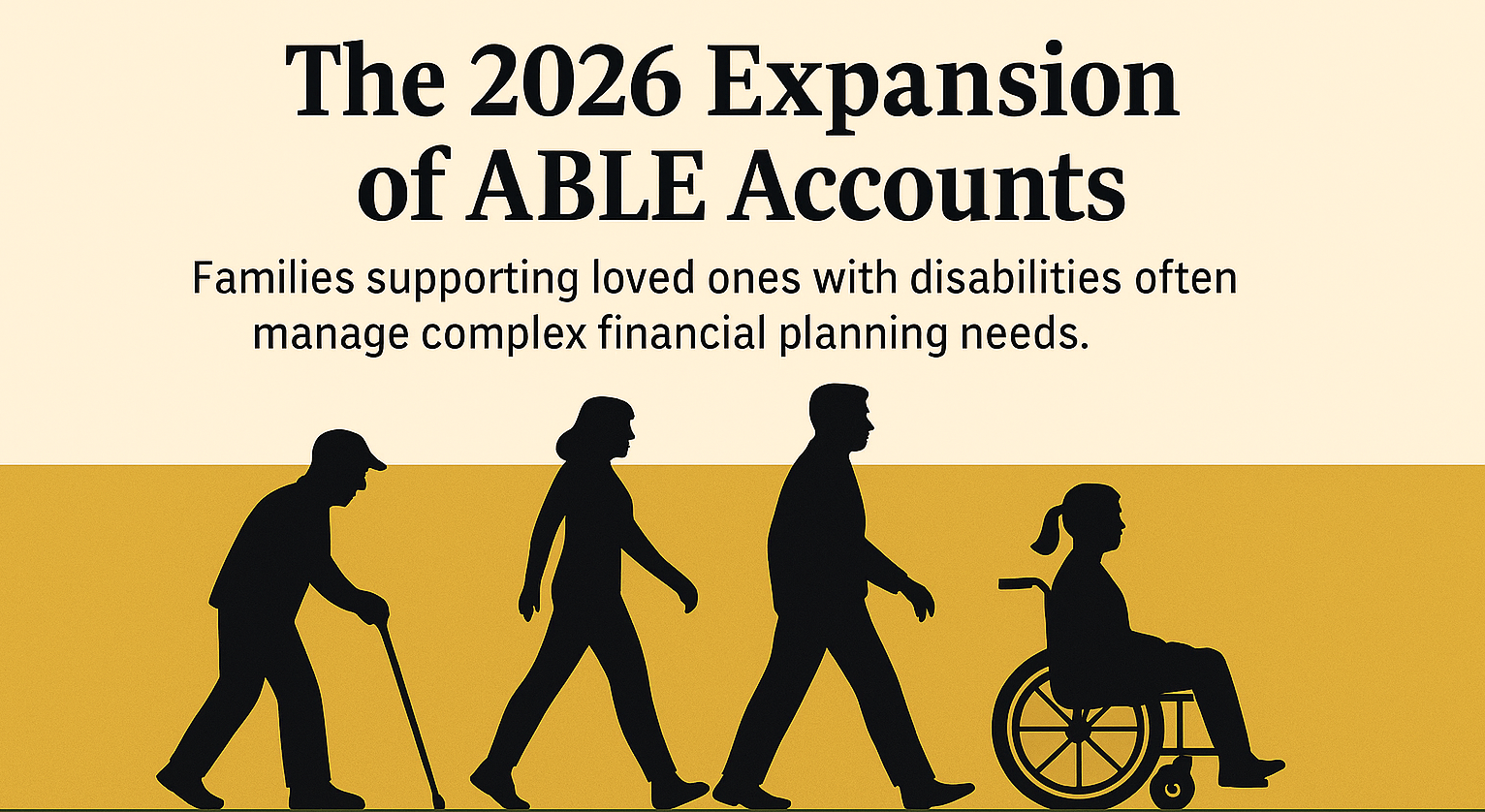
A Powerful Tax-Free Planning Tool Expands in 2026: ABLE Accounts
The 2026 Expansion of ABLE Accounts Could Offer Major Benefits for Millions of Americans.
A significant update taking effect on January 1, 2026, will broaden access to ABLE accounts for individuals living with disabilities. These tax‑advantaged accounts have existed for several years, yet many eligible families have never opened one, often because they assume the rules are complicated or that the benefits apply only to low‑income households. With the expansion, millions of additional Americans will qualify for the first time, creating meaningful opportunities for long‑term planning, tax strategy, and financial stability.
What’s Changing?
Beginning in 2026, the age at which a disability must have begun in order to qualify for an ABLE account increases from age twenty six to age forty six. This single change substantially increases the number of adults who can open an account, particularly individuals who developed significant medical conditions, mobility limitations, or mental health impairments later in life.
This update also benefits families and advisors who previously had limited options for supporting adults who became disabled after their mid‑twenties. With expanded eligibility, more households will be able to take advantage of tax‑free growth and flexible spending options.
How ABLE Accounts Work
ABLE accounts allow eligible individuals to save and invest money without losing access to important means‑tested benefits such as Supplemental Security Income. Earnings in the account grow tax free, and withdrawals remain tax free when used for qualified disability expenses. These expenses cover a broad list of everyday needs, including housing, food, medical care, education, transportation, and assistive devices. Many states allow nonresidents to enroll, and most plans provide investment choices, online dashboards, and optional debit cards.
Contribution Limits and Savings Potential
The contribution rules for 2026 include several important features:
1. The annual limit is scheduled to increase to twenty thousand dollars. 2. Working account holders may qualify to contribute additional amounts beyond the annual limit. 3. Balances up to one hundred thousand dollars do not affect Supplemental Security Income. 4. Total allowable balances vary by state and may exceed six hundred thousand dollars.
These limits allow ABLE accounts to function as emergency reserves, long‑term investment funds, or supplemental support accounts for individuals who require ongoing care.
Who Can Benefit the Most?
The expanded eligibility helps a wide range of individuals and families, including:
1. Adults who developed disabilities in their thirties or early forties. 2. Individuals with chronic illnesses that progressed over time. 3. Workers injured in accidents who previously did not meet the age requirement. 4. High‑earning professionals who want to shelter savings for disability‑related needs without giving up tax advantages. 5. Parents and caregivers who support adult children with long‑term conditions.
These accounts are also valuable for families planning for future care needs, particularly when paired with trusts or coordinated wealth‑transfer strategies.
Tax Planning Implications
From a tax perspective, ABLE accounts offer several benefits:
1. Investment growth is tax free. 2. Qualified withdrawals are tax free. 3. Contributions may be eligible for state tax incentives depending on the program. 4. The account can serve as a complement to a special needs trust in a coordinated estate plan.
When used together, an ABLE account can manage day‑to‑day spending while a trust holds larger assets, manages inheritances, and preserves long‑term benefits eligibility.
Do Families Need to Take Action?
Families who believe they or a loved one may qualify in 2026 should begin reviewing state programs, comparing investment options, and coordinating with tax and financial advisors. Individuals who became disabled after age twenty six should pay particular attention to the upcoming rule change, since they may become eligible on January 1.
Opening an ABLE account is often simple, and most programs allow online enrollment. The key is selecting a plan that aligns with tax goals, investment preferences, and long‑term support needs.