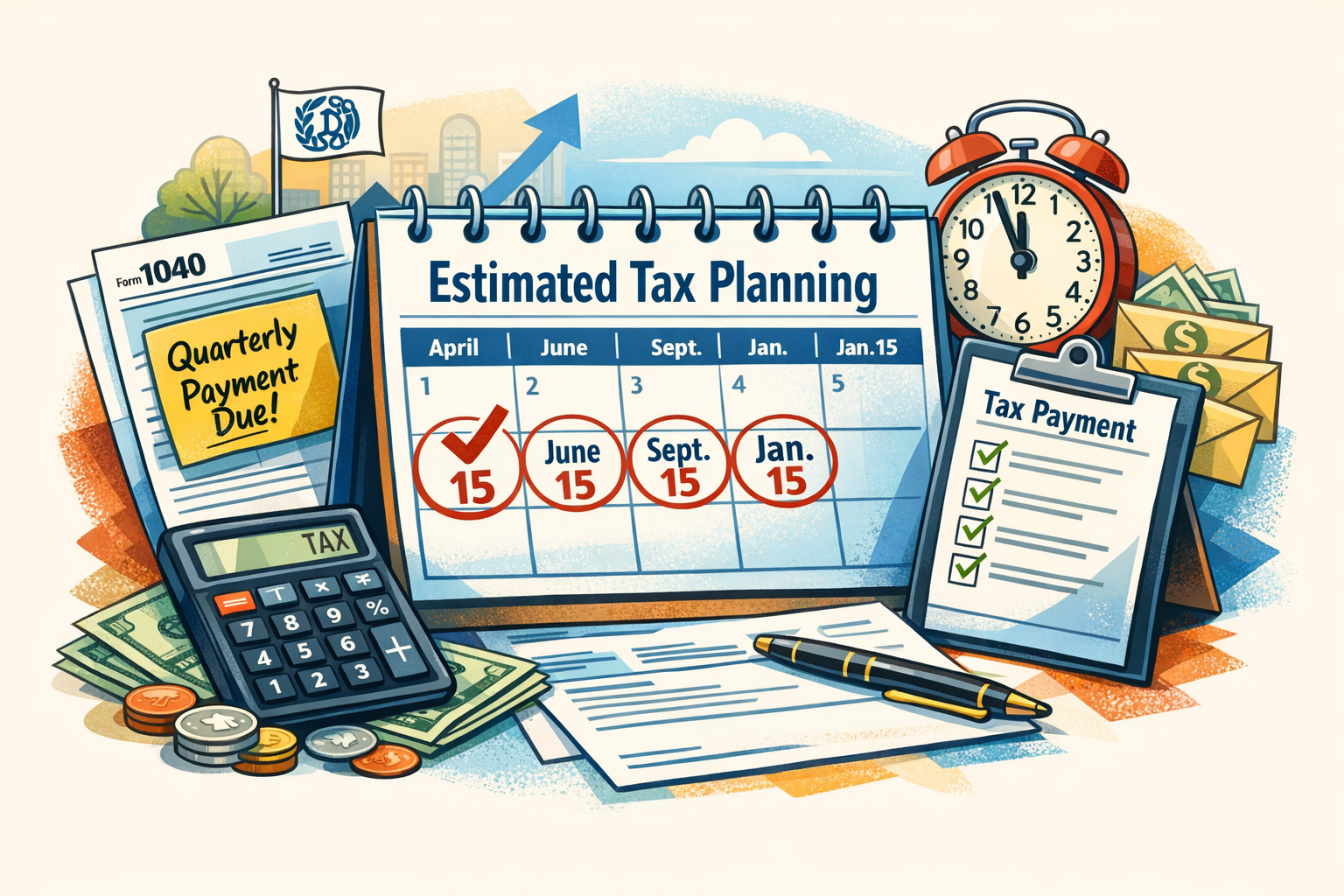
Estimated Taxes Are a Pain. Here’s How to Avoid Costly Penalties
Estimated taxes create challenges for millions of Americans who earn income without automatic withholding. Investors, business owners, independent contractors, and many retirees often discover unexpected penalties when they file their returns, even when their total tax due is paid in full. These penalties result from the timing of payments rather than the amount, which is why estimated tax planning has become a critical component of modern financial management.
As more taxpayers experience fluctuating investment income, variable consulting work, and expanded gig activity, IRS penalties related to estimated taxes have climbed significantly. Understanding how the rules work can help you eliminate unnecessary costs and reduce stress.
This guide breaks down the fundamentals and provides practical tax‑planning strategies used by high‑income professionals and advisory firms to avoid penalties.
Why Estimated Tax Penalties Happen? The IRS requires individuals who owe at least one thousand dollars in tax at filing to pay their taxes throughout the year. Income without withholding, such as capital gains, retirement distributions, rental profits, or self‑employment earnings, must be covered with quarterly estimated tax payments.
If those payments are late or too low, the IRS assesses an interest‑based penalty for each quarter where underpayment occurred. This means you can have enough money withheld by year‑end and still receive a penalty because the IRS believes the payment should have been made earlier.
Many taxpayers are surprised when this happens because their withholding from wages may be correct, yet their investment or business income pushes them into penalty territory.
Master the Safe Harbor Rules Safe harbor rules allow taxpayers to avoid estimated tax penalties even if their income fluctuates or increases unexpectedly.
Safe Harbor 1: Pay at Least 90 Percent of the Current Year’s Tax If you expect significant changes in income, this option provides flexibility. Taxpayers who cover ninety percent of their current year’s final tax liability, through withholding or quarterly payments, can avoid penalties even if the remaining amount is large.
Safe Harbor 2: Pay 100 or 110 Percent of Last Year’s Tax
This is often the simplest strategy.
- Pay one hundred percent of prior year total tax if your adjusted gross income is one hundred fifty thousand dollars or less.
- Pay one hundred ten percent if your income exceeds that threshold.
As long as payments are made in equal quarterly amounts, the IRS will not apply penalties even if income doubles or a major windfall occurs.
This rule is particularly helpful for business owners, retirees with unpredictable distributions, and investors who experience sudden gains.
Use Schedule AI When Income Is Uneven Quarterly income does not always follow an even pattern. Many people receive investment payouts in the final quarter or complete Roth conversions late in the year. The IRS's default assumption treats income as if it were evenly distributed, which often results in unnecessary penalties.
Schedule AI, part of Form 2210, allows taxpayers to report income by quarter. This can eliminate penalties for individuals who received or recognized most of their income later in the year.
Although it is an effective tool, Schedule AI can be time consuming, which is why many taxpayers and advisers prefer to rely on safe harbor strategies instead.
The Withholding Strategy Many Retirees Use One of the most powerful and underused approaches to avoiding estimated taxes comes from understanding how the IRS treats withholding.
Taxes withheld from certain types of income are considered paid evenly throughout the entire year. This includes withholding from:
- IRA withdrawals
- Pension payments
- Social Security benefits
- Employee bonuses
This creates a strategic opportunity. Taxpayers can wait until the end of the year when their income is more predictable, make a planned distribution from a retirement account, and withhold a large portion for taxes. Even if the withholding occurs in December, the IRS treats that payment as if it occurred evenly throughout the year. Retirees with investment income often use this method to completely eliminate quarterly estimated tax filings.
When Can a Penalty Be Waived? The IRS may waive penalties for taxpayers who recently retired, experienced a disability, or faced unusual circumstances. This requires filing Form 2210 with an explanation of the qualifying situation.
While waivers are not guaranteed, they are often approved when documentation clearly supports the request.
Here are some strategies often used by High-Income Professionals and Business Ownersin with the help of advisory practices like ours:
- Review projected income every quarter rather than annually.
- Automate estimated tax payments to avoid missed deadlines.
- Pair investment activity with planned withholding adjustments.
- Use the one hundred ten percent safe harbor to reduce administrative burdens.
- Evaluate the impact of capital gains early, especially in years with volatile markets.
- Coordinate retirement distributions and withholding before December thirty first.
Proactive planning can prevent year‑end surprises and protect cash flow throughout the year.
Estimated taxes can be confusing and expensive if handled incorrectly. The good news is that most penalties are preventable with the right strategy. Whether you rely on safe harbor rules, optimized withholding, or detailed quarterly planning, a consistent approach ensures clarity and compliance.
If you want help reviewing your estimated tax strategy or planning for fluctuating income, our team can provide tailored guidance. Booking a consultation today can save you penalties and stress next tax season.