New 401(k) Catch‑Up Rule Could Raise Taxes for Older, High‑Earning Workers
New 401(k) Catch‑Up Rule Could Raise Taxes for Older, High‑Earning Workers
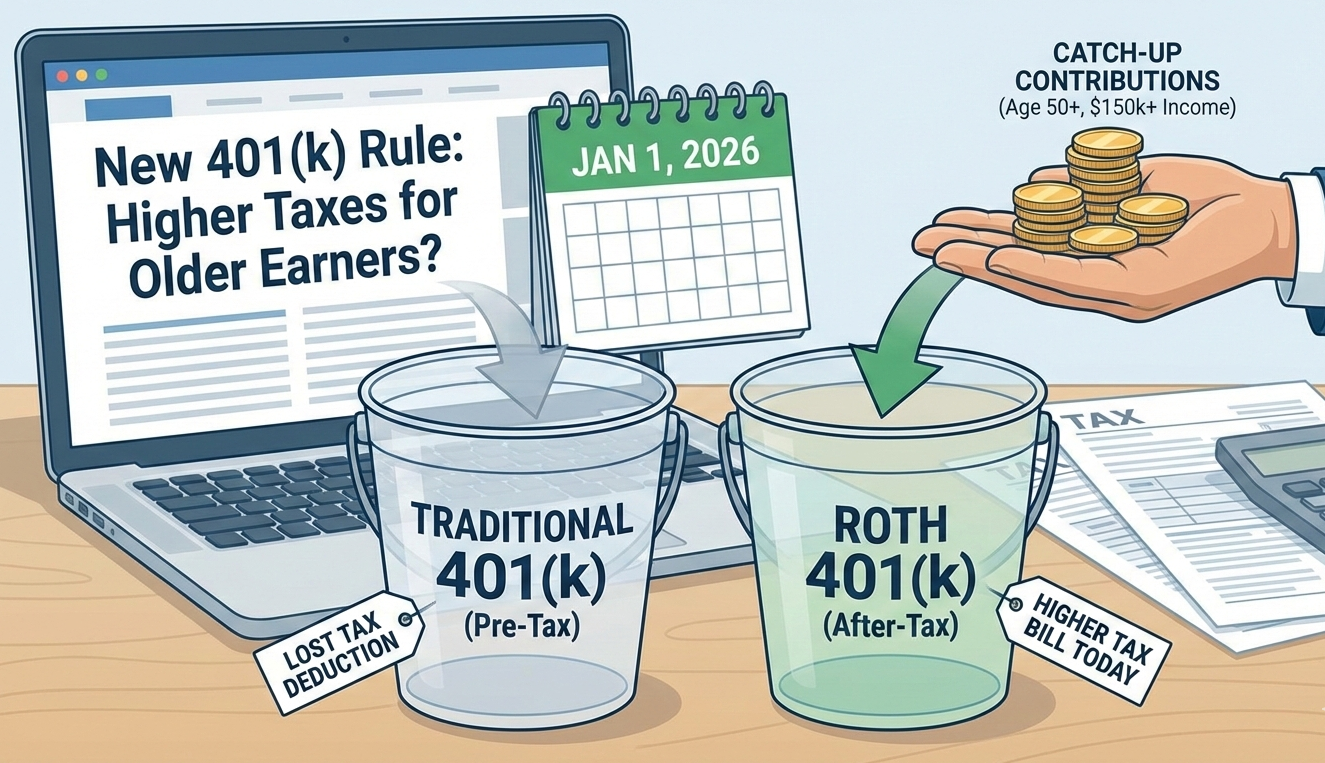
A major change that took effect on January 1, 2026, is altering how many Americans over age 50 save for retirement. Higher‑income earners who make “catch‑up” contributions to their workplace retirement plans will now be required to direct those additional dollars into a Roth account, potentially increasing their tax bill today.
What’s Changing?
Under the new law, workers aged 50 and older who earned more than $150,000 in the previous year must make their catch‑up contributions on a Roth basis.
This removes the immediate tax deduction they previously received when making those extra contributions into a traditional 401(k). For individuals in their highest earning years, that upfront tax break is often significant, so the shift could meaningfully impact take‑home pay and tax planning.
Industry experts note that many employees still aren’t aware of the rule change, even though it applies this year.
How Much Can Eligible Workers Contribute?
The IRS allows older workers to boost their retirement savings through additional contributions:
1. Age 50+: Up to $8,000 extra, on top of the standard $24,500 annual limit
2. Ages 60–63: Eligible for an increased catch‑up amount of $11,250
These rules apply to 401(k) plans, as well as 403(b) and government 457(b) plans. Individual Retirement Accounts (IRAs) are not affected by this Roth mandate.
Who Exactly Is Impacted?
You’ll be subject to the new requirement if:
1. You earned over $150,000 from your current employer last year (including retirement contributions)
2. You’re at least 50 years old
3. You’re participating in a 401(k), 403(b), or 457(b) plan that allows catch‑up contributions
A few important clarifications:
1. If you were hired during 2026, your income from a previous employer doesn’t count, so you may still contribute on a pretax basis this year.
2. Higher‑earning self‑employed individuals are exempt, because the rule applies only to W‑2 wages.
3. The rule does not apply to IRA catch‑up contributions.
What Does This Mean for Taxes?
Traditional 401(k):
1. Contributions reduce taxable income today
2. Withdrawals in retirement are taxed as ordinary income
Roth 401(k):
1. Contributions are made with after‑tax dollars
2. Qualified withdrawals in retirement are tax‑free
Being forced into Roth contributions means losing a valuable current‑year tax deduction, but gaining tax‑free income in retirement, which can be strategically useful for tax diversification and Medicare premium planning.
Do Workers Need to Take Action?
That depends entirely on your employer’s plan.
Some employers will automatically redirect catch‑up contributions into the Roth bucket for employees who meet the income threshold.
Others require employees to opt in or formally consent to the switch. If you don’t take action where required, your catch‑up contributions may simply stop, meaning you could unintentionally miss out on thousands of dollars in retirement savings for the year.
The safest move is to check with your plan administrator to understand whether you must authorize the change.