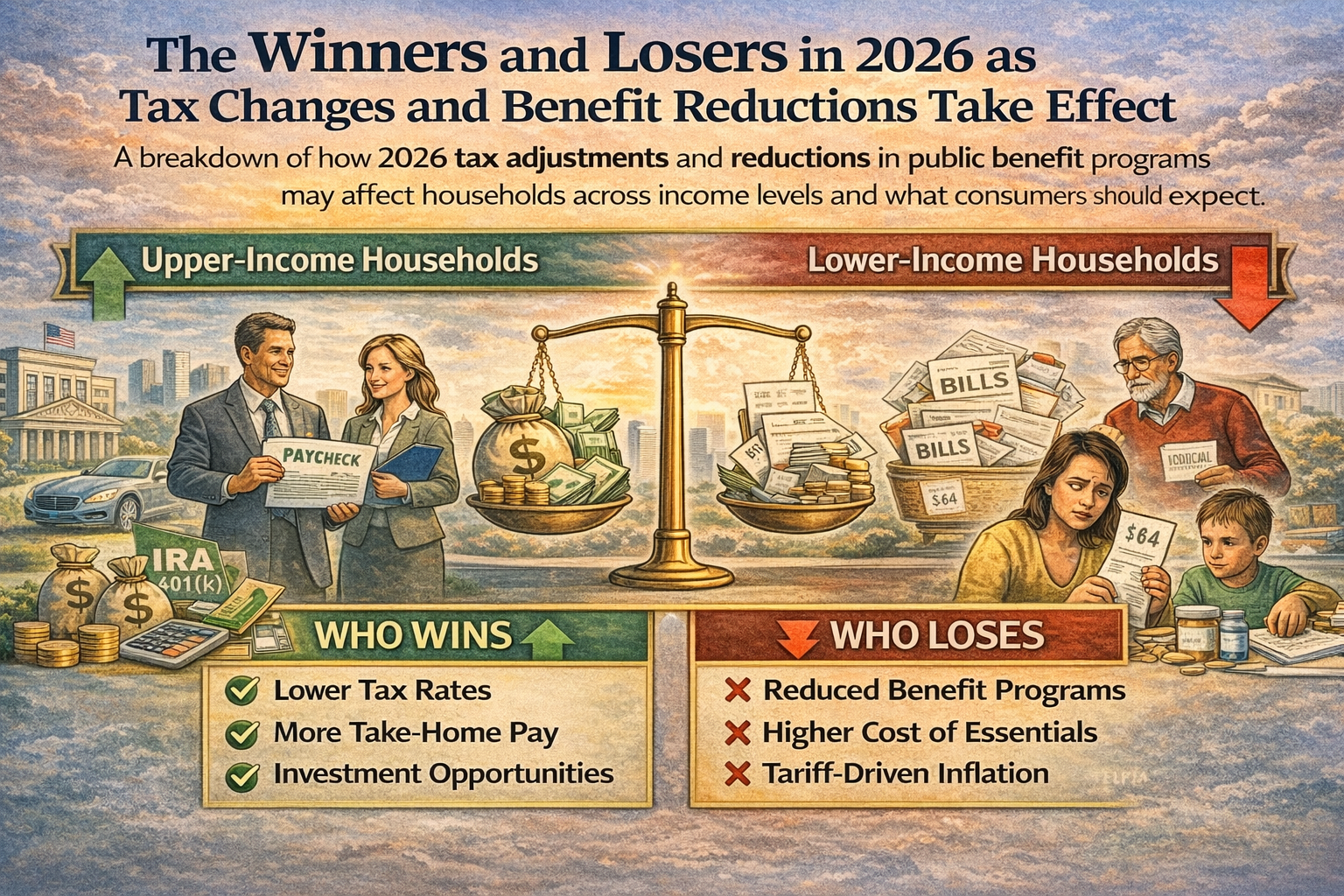
The Winners and Losers in 2026 as Tax Changes and Benefit Reductions Take Effect
A breakdown of how 2026 tax adjustments and reductions in public benefit programs may affect households across income levels and what consumers should expect in the coming year.
As households move into 2026, the combined effects of new tax reductions and changes to federal benefit programs are set to produce a mixed financial environment. While many taxpayers will see savings from lower income taxes, others will feel tighter budgets as support programs become more limited. These shifts create a clear divide in how different income groups experience the coming year, and they will likely influence overall consumer behavior.
At J&E Advisory Group we help clients evaluate these developments from a financial planning perspective. Understanding who benefits and who faces new pressures is essential for budgeting, spending, and long term strategy.
How Tax Reductions Support Higher Income Earners
The newest round of tax cuts scheduled for 2026 is expected to provide meaningful relief for middle and high income households. These groups typically owe more federal income tax, which means lower tax rates and adjustments to withholding will result in more take home pay. Analysts estimate that collectively, taxpayers will see a significant rise in disposable income as these updates take effect throughout the year.
Key Points for Taxpayers
- Higher income households gain the most because their tax liabilities are large enough for the new reductions to make a noticeable difference.
- Many of these savings will appear automatically in paychecks due to changes in withholding rules.
- For households that itemize deductions or have complex financial situations, the upcoming spring tax season may provide even more clarity on total savings.
For many of our clients, the increase in after tax income presents an opportunity to boost retirement contributions or create additional liquidity for investments.
Why Lower Income Households May Feel New Pressures
While tax reductions create financial breathing room for some, program changes in 2026 are expected to tighten budgets for lower income consumers. Several federal benefit programs have been adjusted, including nutrition assistance programs, healthcare support, and student loan policies. These changes will likely reduce the amount of direct support millions of Americans receive each month.
Challenges for Lower Income Individuals
- Reduced funding for food assistance programs means some households may need to redirect spending toward essential groceries.
- Modifications to healthcare premium assistance could lead to higher out of pocket costs for many enrollees.
- Some student loan borrowers may face changes in eligibility or repayment structures that increase monthly expenses.
These combined adjustments mean that the lowest income groups will face more financial strain despite seeing little benefit from the new tax cuts.
How Tariffs Continue to Influence Household Budgets
Tariffs remain another major factor shaping the financial outlook for 2026. When tariffs raise the cost of imported items, consumers usually absorb a significant portion of that increase. Lower income households tend to spend more of their income on goods, so they feel these price shifts more directly.
Impact of Tariff Driven Inflation
- Everyday goods that rely on imported components may see higher shelf prices.
- Households with limited flexibility in their budget experience the largest impact.
- Middle and upper income consumers are better positioned to absorb these changes since a smaller share of their income goes toward essential goods.
Understanding how tariffs flow through the economy helps families prepare for the continued cost pressures expected this year.
Additional Cost Considerations for 2026
The financial landscape is further shaped by developments in healthcare expenses and retirement benefits. The expiration of enhanced premium subsidies under the Affordable Care Act means higher insurance premiums for many individuals purchasing their own coverage. Furthermore, while Social Security benefits will increase in 2026, Medicare Part B premiums will also rise.
What This Means for Retirees
- Some retirees with modest Social Security payments may find that their benefit increase does not fully cover their higher Medicare costs.
- Retirees with broader financial means are less affected because their income sources are more diversified.
As always, evaluating expected healthcare expenses early in the year can help households manage these adjustments.
Understanding the Overall Distributional Impact
The combined effect of tax reductions, tariffs, and program changes results in a divided outcome across income groups. Higher income households gain the most from reduced taxes and are least affected by benefit program adjustments. Lower income households experience increased pressure from reduced support programs and tariff related price increases. This creates a pattern in which spending power strengthens at the top of the income distribution while the lower end sees softer growth. Businesses that serve these segments may observe differences in demand that reflect this uneven distribution.
The financial outlook for 2026 features both positive and challenging elements. Tax cuts provide meaningful income growth mainly for middle and high earners. At the same time, benefit reductions and tariff related cost increases will impact lower income households more directly.
For individuals and businesses in every income range, proactive planning is essential. Assessing how these shifts apply to your specific situation can help you adjust budgets, savings plans, and long term financial goals.
If you want to understand how the 2026 changes affect your tax liability or your household’s financial plan we welcome you to schedule a consultation with our team at J&E Advisory Group.