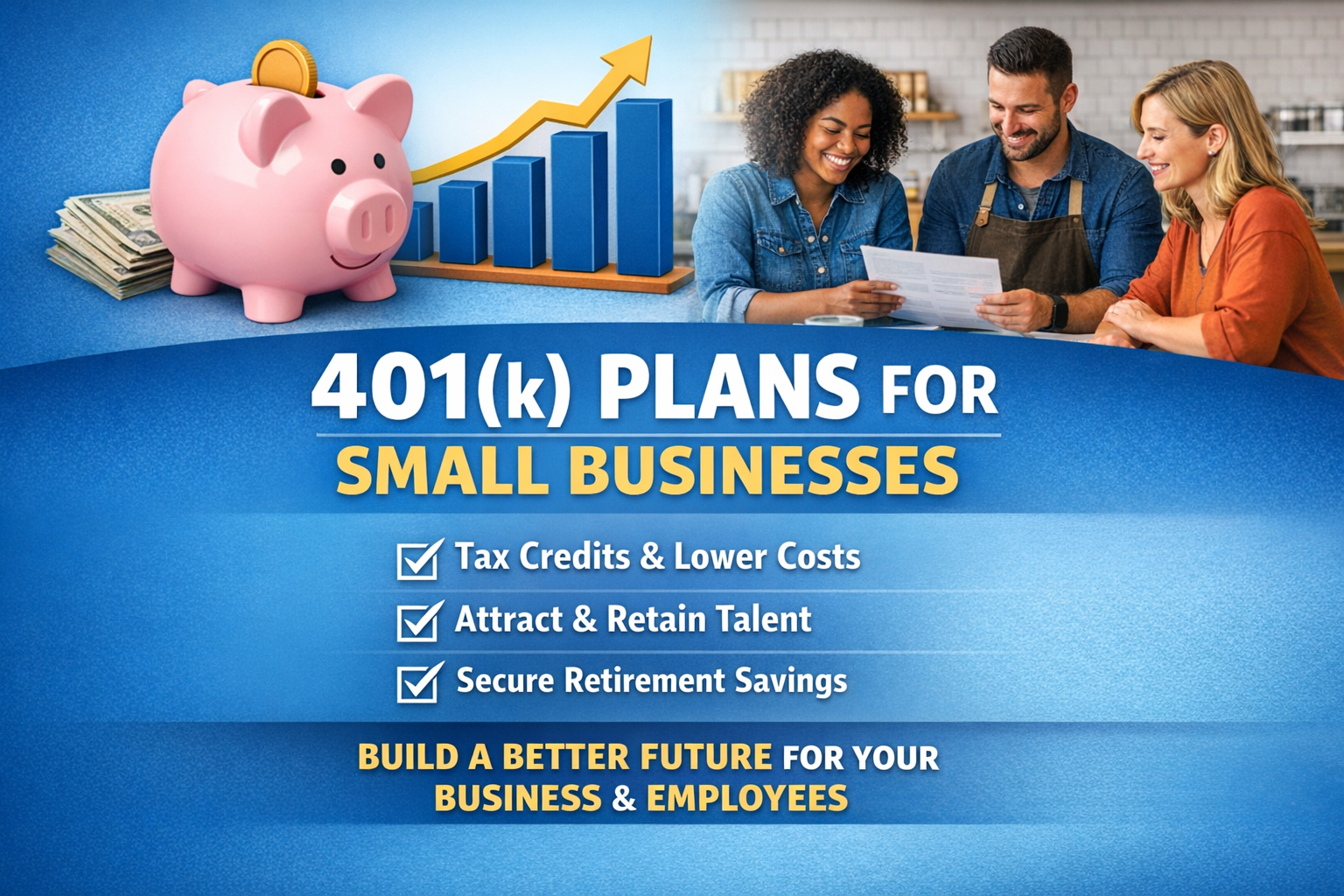
Why More Small Businesses Are Turning to 401(k) Plans in 2026
In recent years, a growing number of small businesses have begun offering 401(k) retirement plans. What was once considered a benefit exclusive to larger companies is quickly becoming a strategic necessity for smaller employers that want to stay competitive, especially in a tight labor market. With new incentives, lower costs, and simplified plan structures, adopting a 401(k) is now more accessible than ever for small firms.
Below, we break down the key forces fueling this shift and how these changes impact both employers and employees.
The Rising Adoption of 401(k)s Among Small Employers Small employers have historically lagged behind larger organizations when it comes to offering retirement plans. The main challenges included administrative workload, high fees, and uncertainty about compliance obligations.
That landscape is changing. Millions of workers employed at companies with fewer than 100 employees now have access to a workplace retirement plan. This surge is driven by several factors, including improved technology, new plan formats, and an increased focus on competitive benefits within smaller firms.
For many small employers, offering a 401(k) is no longer a “nice-to-have.” It is becoming a core component of attracting dependable talent and keeping high performers engaged.
Tax Credits and Lower Costs Are Making 401(k)s More Appealing One of the largest drivers of adoption is the availability of expanded federal tax credits designed specifically to help small businesses launch a retirement plan. These credits can offset costs associated with:
- Plan setup
- Administrative fees
- Employee education
- Automatic enrollment features
Additionally, several modern 401(k) platforms now offer simplified online administration at significantly lower price points than traditional providers. This combination of tax benefits and reduced costs allows small employers to implement a plan with less financial pressure.
How State Requirements Are Also Shaping Adoption More than a dozen states have implemented requirements mandating that employers either sponsor their own retirement plan or connect employees to a state facilitated option.
Even though these programs vary by state, the trend is clear. Many small businesses choose to offer their own 401(k) instead of defaulting to the state program because:
- A 401(k) offers higher contribution limits
- Employers retain control over plan design
- The benefit is more competitive in the job market
This has prompted many small firms to take proactive steps and implement employer sponsored plans rather than waiting for compliance deadlines.
The Growth of Pooled Employer Plans Is Reducing Complexity Pooled Employer Plans, also known as PEPs, allow multiple unrelated businesses to participate in the same retirement plan. This model significantly reduces administrative responsibilities for employers because the pooled plan provider handles most of the oversight.
For small companies that want retirement benefits without the burden of maintaining their own standalone plan, PEPs provide a practical alternative that can offer:
- Lower investment and administrative costs
- Streamlined compliance
- Professional oversight and management
This structure is gaining momentum among businesses that previously avoided 401(k)s due to complexity.
Why Implementing a 401(k) Is Becoming a Strategic Advantage? Beyond the compliance and tax benefits, small businesses are finding that offering a retirement plan delivers long term value in several ways.
1. Improved Talent Attraction Job seekers often view retirement savings options as a sign of workplace stability. Having a 401(k) can make a small business more competitive with larger employers.
2. Higher Retention and Employee Loyalty Employees who use the plan often feel more connected to the business and are more likely to stay long term.
3. Benefits for the Business Owner Owners can contribute to their own retirement account at far higher levels compared to other plan types. This allows them to prioritize their financial future while building the business.
Small businesses are increasingly embracing 401(k) plans as part of a modern and competitive benefit strategy. Thanks to expanded tax incentives, new plan types, technological improvements, and evolving state requirements, offering a 401(k) is more accessible than ever.
For small business owners, now is an excellent time to evaluate whether a retirement plan could support employee satisfaction while helping build long term financial security.
If you want personalized guidance on implementing a 401(k) or exploring tax efficient benefit strategies, J&E Advisory Group can help you navigate the options.